


Drug supply, production and precursors – the current situation in Europe (European Drug Report 2026)
Analysis of the supply-related indicators for commonly used illicit drugs in the European Union suggests that availability remains high across all substance types. On this page, you can find an overview of drug supply in Europe based on the latest data, supported by the latest time trends in drug seizures and drug law offences, together with 2024 data on drug production and precursor seizures.
This page is part of the European Drug Report 2026, the EUDA’s annual overview of the drug situation in Europe.
Last update: 9 June 2026
High drug availability in Europe sustained by tactical production and trafficking shifts
Drug supply and the market
Market and other indicators for the most commonly used substances suggest drug availability remains high in EU countries. A broad range of drugs are widely available, often at high potency or purity, elevating risks to health. These include novel substances, where both consumer and scientific knowledge about the health risks may be limited. For some drugs, such as cannabis, diverse products are being sold, while for others, including opioids and stimulants, the variety of substances available has increased. Concern exists about growing risks, especially for vulnerable and marginalised groups. These risks include poisonings and deaths from consuming high-potency or novel substances, possibly unknowingly, in drug mixtures and tablets, especially in the context of polysubstance use.
Fluid drug trafficking methods challenge responses, straining resources
Europe’s drug market is fed and shaped by agile global supply chains. Countries in South America, West and South Asia and North Africa remain major sources for illicit drugs entering Europe, such as cocaine, heroin and cannabis resin, while China and India remain important source countries for new psychoactive substances. India is an important source of substances such as synthetic cathinones and ketamine, which are also produced within Europe. Drug precursors and related chemicals are also often reported to be sourced from China. In addition, Canada and the United States, which have commercial cannabis markets, are significant sources of cannabis products.
While the overall quantities of cocaine and cannabis seized in Europe decreased in 2024, the infiltration of commercial supply chains remains key to the bulk trafficking that sustains the scale of drug markets, reflected in the continued seizures of large drug shipments in Europe’s ports. Commercial container shipments remain vulnerable to exploitation by trafficking networks using sophisticated concealment methods combined with corruption, intimidation and violence against key staff in the distribution chain.
In the face of intensified law enforcement and customs operations at major European ports and efforts to enhance resilience through the European Ports Alliance, trafficking networks have diversified the routes, methods and concealments they employ, using multiple modi operandi (Figure 1.1). Drugs are trafficked over land, sea and air, including through commercial and private means of transportation, letters and parcels. Increased use of at-sea transfers via a variety of vessels, semi-submersibles, drones and deep concealment has created an increasingly unpredictable, fragmented and resource-intensive target for law enforcement and customs. In 2026, Spanish authorities in conjunction with international partners seized 10 tonnes of cocaine concealed in salt (Figure 1.2). Such incidents, and growing forms of technology-enabled trafficking such as the use of drones, are demanding to respond to and require a renewed approach to keep pace with the tactics of traffickers. This dynamic situation is addressed in the EU Drugs Strategic Framework, endorsed by the Council of the European Union in March 2026. The framework includes the EU Drugs Strategy and the European Commission’s Communication for an Action Plan against drug trafficking. It also includes the updated rules for monitoring and controlling drug precursors, and implementing ProtectEU, a new European internal security strategy. The EUDA continues to develop new tools and services to support Europe’s response to shifting risks and emerging preparedness challenges.

Show a text version of the above graphic
Trafficking methods
- Infiltration of logistical supply chains
- Intermodal shipping containers
- Container switching, code fraud, extraction teams
- Corruption, intimidation of officials and vessel operators
- More use of smaller ports
- Floating GPS-tagged drops
- Collection from mother ships by small vessels
- Speedboats, pleasure craft
- Semi-submersibles (‘narco subs’)
- ‘Torpedoes’ (watertight containers attached to ships)
- Chemical concealment or masking of shipments
- More use of general aviation, small airfields


Note: Seizures by the Spanish National Police (left) and Spanish Tax Agency, Civil Guard and National Police (right); the Maritime Analysis Operations Centre-Narcotics collaborated in both operations.
Shifting opium production dynamics and stockpiles fuel European heroin market
The ban on drug production in Afghanistan introduced by the Taliban in 2022 led to a sharp decline in both poppy cultivation and opium production, with estimates indicating a 95% drop in cultivation and production in 2023 and similarly low levels persisting in 2024. This has raised concerns regarding the potential for a heroin shortage in Europe and increased availability of various other drugs, including synthetic opioids. However, recent EUDA-funded research indicates that despite continued low levels of poppy cultivation in 2025, a heroin shortage in Europe remains unlikely in the short to medium term. Mitigating factors, including improvements in heroin processing methods, adulteration practices and the existence of major opium stockpiles have maintained the availability of heroin in Afghanistan and have so far limited the impact on European heroin markets. Importantly, in a structural shift in regional opiate production dynamics, Pakistan has become a large producer, essentially in the province of Balochistan, directly south of Afghanistan and home to Gwadar port, where many Afghan farmers and ‘opium cooks’ have relocated to lease land and operate illicit heroin laboratories. The relocation of Afghan farmers and ‘opium cooks’ to this area places production close to the Makran coast, a long‑established maritime drug trafficking corridor connecting the region to consumer markets globally, including in Europe. In 2025, Balochistan’s opium output may rival Afghanistan’s, potentially reducing the overall impact of the Taliban ban on regional flows of opiates (see Understanding Europe’s drug situation in 2026). Nonetheless, four years after the imposition of the Taliban ban, European countries should remain alert to any signs of changes on heroin markets, especially increased availability and use of synthetic opioids or stimulants (see also Heroin – the current situation in Europe).
Diverse illicit drug production in Europe threatens health and the environment
Europe remains a significant production region for illicit drugs, with EU Member States annually dismantling thousands of illicit production sites. Most of these relate to cannabis cultivation for domestic markets, while the remainder are primarily involved in the production of synthetic drugs for EU and non-EU markets.
Illicit drug production threatens public health and safety. It creates risks for law enforcement responders, people consuming drugs and by causing environmental damage, can harm local communities near production or chemical waste dumping sites. The illicit drug production facilities dismantled in the European Union in 2024 were manufacturing many different substances, including amphetamine, methamphetamine, synthetic cathinones, MDMA, and processing of cocaine and heroin (Figure 1.3). Smaller sites likely supply local markets and, occasionally, darknet markets. Larger sites supply both local and non-EU markets and are mostly detected in Belgium and the Netherlands, but also in Poland, Germany and Spain. Some laboratories can produce multiple substances, such as synthetic stimulants with similar precursor chemical and manufacturing equipment requirements. Commenting authoritatively on the escalation of illicit drug production in Europe is difficult due to monitoring challenges, including data availability issues and uncertainty regarding the output capacity of production sites.
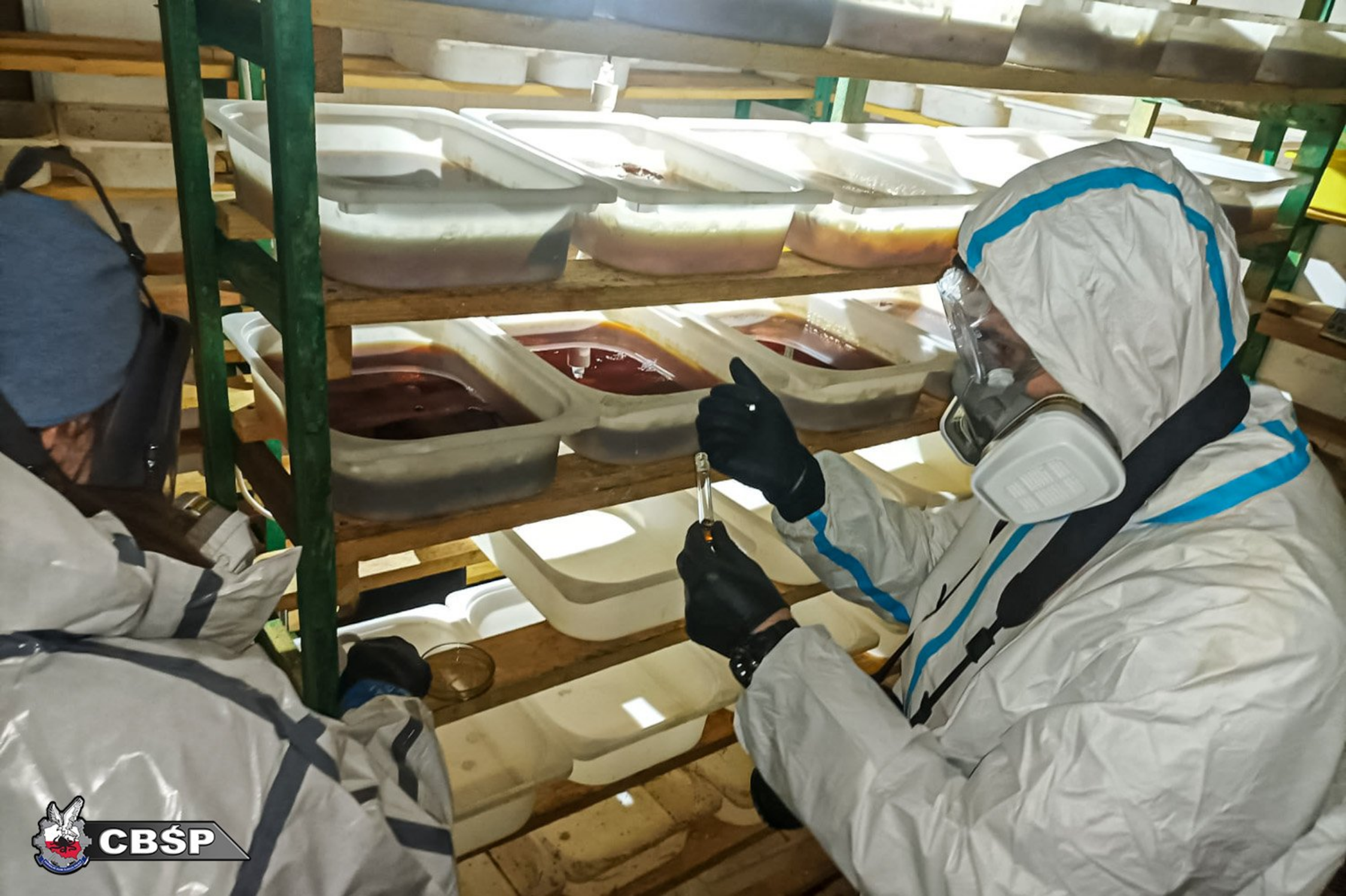
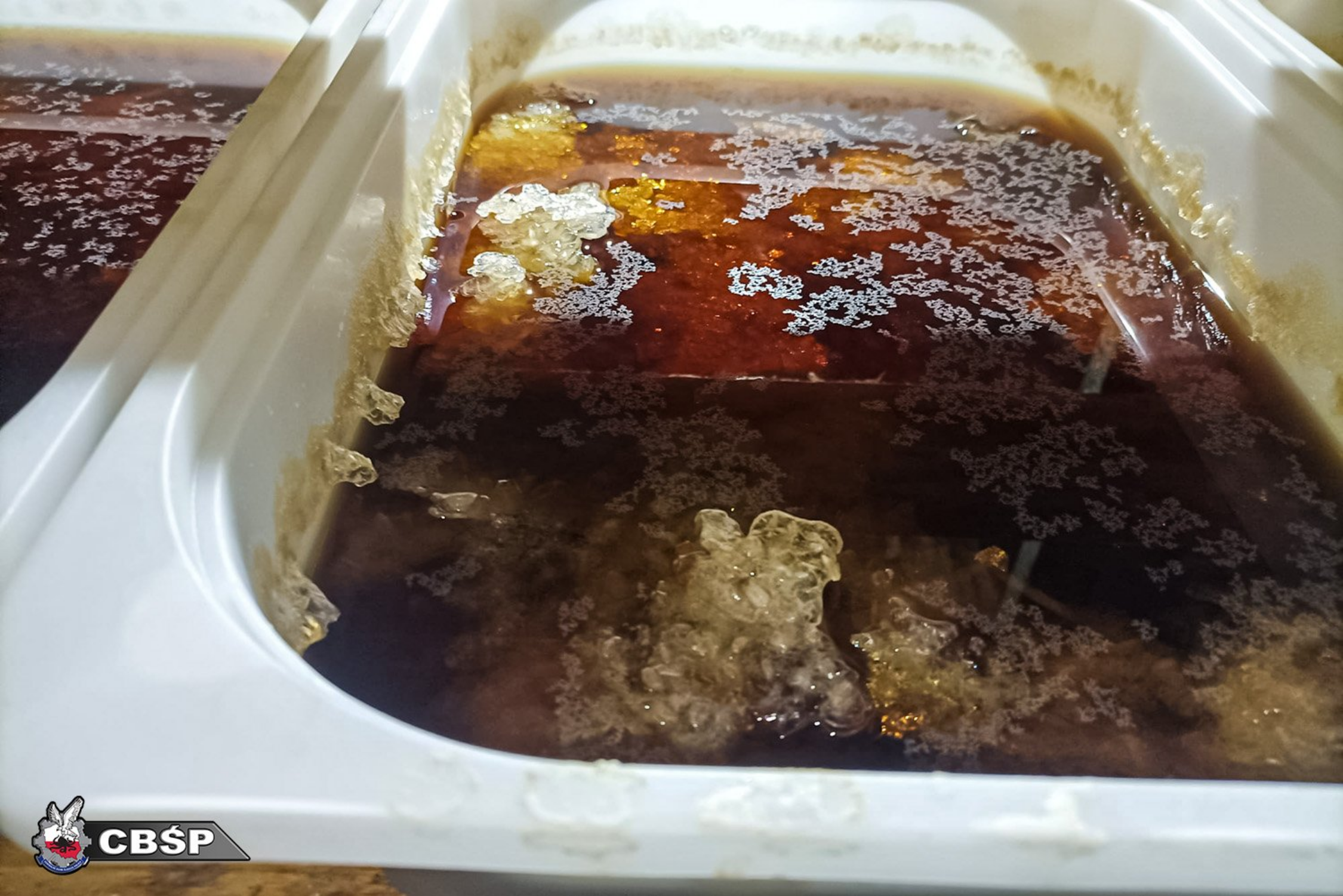
Note: Seizure by the Central Bureau of Police Investigation.
Cocaine production
The detection of more and sometimes sizeable facilities for cocaine production, extraction, cutting and packaging in recent years indicates innovative methods are used to traffic cocaine to Europe. Large amounts of cocaine hydrochloride are processed in Europe, mostly in Belgium, the Netherlands, Spain and Portugal, from intermediary products (coca paste and cocaine base) trafficked from South America. Seizures of ethyl acetate, a solvent used in cocaine processing, reached 42 500 litres in 2024, further indicating that cocaine extraction and processing continue at scale.
Synthetic drug production
Innovation in production processes is also evident from seizures of chemicals that can be used to manufacture the precursor chemicals needed to produce synthetic drugs. The use of a wider range of chemicals to produce new substances and pursue different synthesis processes creates a shifting and complex challenge for customs, law enforcement agencies and regulators.
Alongside large imports of synthetic cathinones into Europe from China and India, the illicit production of various internationally controlled synthetic cathinones (e.g. 3-MMC, 4-MMC, alpha-PVP) has for many years been reported by some European countries, primarily Poland. The EUDA has risk assessed precursor chemicals for manufacturing synthetic cathinones, such as propiophenones, that are not currently internationally controlled as part of EU action to halt their use in illegal drug production.
Signals suggest that semi‑synthetic cannabinoids and certain synthetic cannabinoids are also produced in European countries. Concern has arisen regarding the use of CBD as a precursor for the production of semi-synthetic cannabinoids, such as HHC variants.
Illicit drug producers continue to exploit unscheduled chemicals to evade detection
Illicit drug producers continually switch to uncontrolled chemicals to evade international precursor controls. Reflecting this ongoing cycle, large amounts of BMK and PMK glycidic derivatives were seized in 2024 (39.3 tonnes) and preliminary 2025 data indicate that new BMK alternatives have emerged (e.g. methyl 4-phenylacetoacetate and ethyl 4-phenylacetoacetate), with Spain reporting seizures of 2 tonnes of these uncontrolled chemicals. The EUDA will perform risk assessments on these chemicals in 2026. The European Commission’s proposed new precursor control regulation enhances the EUDA’s monitoring role and establishes an EU-wide drug precursors repository. Once adopted by the Council and Parliament, the overhauled precursors legislation should strengthen controls at the European Union’s external borders and within the EU internal market. It should also facilitate the creation of generic (whole chemical families) bans of ‘designer precursors’, which are chemical variants of scheduled substances with no known legitimate use, although allowing the possibility of research use.
Key data and trends
Drug supply trends
- Indexed trends, overall, show that the quantities of drugs seized in the European Union increased between 2014 and 2024, particularly in the past 7 years (Figure 1.4).
- Between 2014 and 2024, the largest increases in quantities seized were for methamphetamine (1 019%), cocaine (471%), MDMA (386%), amphetamine (150%) and herbal cannabis (79%).
- EU Member States reported an estimated 1 million seizures in 2024, with cannabis products accounting for 68% of all reported seizures (Figure 1.5 and Figure 1.6).
- Between 2014 and 2024, the number of seizures of cannabis resin decreased by 11%, herbal cannabis by 34% and heroin by 39% (Figure 1.7). Over the same period, the number of seizures increased for methamphetamine (234%), MDMA (66%), cocaine (42%) and amphetamine (9%).
Trends in drug law offences
- In 2024, EU Member States reported an estimated 1.6 million drug law offences, an increase of 38% since 2014. More than three quarters of the offences (76% or 1.2 million) relate to use or possession for personal use.
- Of the estimated 1.6 million drug law offences, the drug mentioned in the offence is reported in just under 871 000 offences, of which 706 000 were for possession or use, 161 000 were for supply-related offences and 4 000 were for other types of offences (Figure 1.8).
- In 2024, cannabis accounted for 477 000 (68%) of the use or possession offences for which the drug is known and accounted for around 74 000 (46%) of the drug supply offences.
- Higher numbers of offences related to cocaine and MDMA, both for possession and supply, were reported in 2024 than in 2014. Over the same period, fewer offences were reported for methamphetamines, heroin and cannabis, both for drug possession and drug supply related offences (Figure 1.9 and Figure 1.10).
EU production and precursors data for 2024
- The scheduling of a range of alternative chemicals as precursors under international control caused a sharp reduction in the quantity of chemicals used in the production of synthetic drugs seized in the European Union: from a peak of 178 tonnes in 2023 to 64 tonnes in 2024. About 54 tonnes were seized annually in the last decade (Figure 1.11).
Figure 1.11a. Quantity of key precursors and non-scheduled chemicals seized in the EU (2012-2024)
Figure 1.11b. Quantity of key precursors and non-scheduled chemicals seized in the European Union in 2024 (kilograms), by association with drug production
Figure 1.11c. Quantity of key precursors and non-scheduled chemicals seized in the European Union in 2024 (litres), by association with drug production
- Cannabis: EU Member States reported 7 300 seizures of cannabis plants, amounting to 2.1 million individual plants and 21 tonnes in 2024 (2.3 million plants and 11 tonnes in 2023). In 2024, around 4 000 illicit cannabis cultivation sites were dismantled in 11 EU Member States.
- In 2024, at least three illicit sites involved in the production of THC or semi-synthetic cannabinoids were dismantled, two in the Netherlands and one in Poland.
- Heroin: Twenty heroin production (cutting and packaging) sites were dismantled in EU Member States in 2024 (15 in the Netherlands, 4 in Czechia, 1 in Italy). Czechia reported dismantling two morphine sites and the Netherlands reported two sites producing lean, a codeine-containing liquid. Three seizures of the heroin precursor chemical acetic anhydride were reported in the European Union in 2024, two by the Netherlands, amounting to 15 038 litres (740 litres in 2023). Worldwide, seizures of acetic anhydride have been declining substantially since 2019. In 2024, the Netherlands reported an additional theft of 27 000 litres of acetic anhydride.
- Cocaine: Six EU Member States reported dismantling 42 sites related to cocaine production in 2024 (34 in 2023): the Netherlands (24), Spain (7), Portugal (4), Belgium (4), Italy (2), Germany (1). One production site was dismantled in Türkiye. Potassium permanganate seizures decreased in 2024 to 17 kilograms (2 082 kilograms in 2023).
- Amphetamine: In 2024, 9 EU Member States reported dismantling 110 amphetamine laboratories (93 in 2023): the Netherlands (33), Germany (28), Poland (29), Belgium (11), Austria (2), Sweden (3), Italy (2), Bulgaria (1) and Spain (1). One site related to amphetamine production was dismantled in Norway.
- Methamphetamine: Ten EU Member States reported dismantling 252 methamphetamine laboratories in 2024 (250 in 2023): Czechia (184), the Netherlands (23), Bulgaria (18), Germany (5), Poland (11), Spain (4), Slovakia (2), Belgium (2), Austria (2) and Romania (1). Five sites were dismantled in Türkiye. Czechia also reported dismantling pseudoephedrine (19) and ephedrine (1) sites. Seizures of ephedrine and pseudoephedrine amounting to 6 404 kilograms (both powders and tablets) were reported by 11 EU Member States in 2024 (7 847 kilograms by 16 EU Member States in 2023).
- BMK: Amphetamine and methamphetamine can be produced from BMK, a controlled precursor that can itself be manufactured from alternative chemicals. In 2024, the Netherlands reported dismantling 27 laboratories producing BMK. In 2024, 3 732 litres of BMK (5 453 litres in 2023) and 21.6 tonnes of substances (66.2 tonnes in 2023) that can be used to produce BMK were seized in EU Member States. These seizures included 21.6 tonnes of glycidic derivatives of BMK (66.1 tonnes in 2023), 35 kilograms of MAPA (43 kilograms in 2023) and 47 kilograms of APAA and APAAN (1.3 kilograms of APAAN in 2023). Seizures of tartaric acid, used to retrieve the most potent form of methamphetamine (d-methamphetamine, used for producing ‘crystal meth’) from mixtures produced by BMK methods, amounted to 7.5 tonnes in 2024 (10.9 tonnes in 2023) and were reported by the Netherlands, Spain and Germany.
- MDMA: Four EU Member States reported dismantling 59 MDMA laboratories in 2024 (36 in 2023): 47 in the Netherlands (32 in 2023), 4 in Belgium (4 in 2023), 7 in Spain and 1 in Germany. In 2024, the Netherlands reported dismantling 24 laboratories producing the controlled MDMA precursor PMK. Seizures of MDMA precursors decreased to 23.9 tonnes in 2024 (64.1 tonnes in 2023). Seizures of the MDMA precursor PMK and its glycidic derivatives amounted to 23.9 tonnes in 2024 (63.1 tonnes in 2023). Seizures of MAMDPA, which peaked at 4.5 tonnes in 2021, were not reported in 2024, and only 5 kilograms of IMDPAM was reported seized in 2024 (450 kilograms in 2023).
- Cathinones: Four EU Member States reported 63 synthetic cathinone production sites in 2024: 47 in Poland (40 in 2023), 11 in the Netherlands (8 in 2023), 3 in Germany (2 in 2023), 1 in Latvia and a multi-drug production site in Lithuania. All but one of the sites were producing single drugs: 4-MMC (19 sites), 3-CMC (15), 4-CMC (22), alpha-PVP (5), methcathinone (3). The multi-drug site was producing several cathinones (2-MMC, 3-CMC, 4-CMC). Seizures of synthetic cathinone precursors amounted to 2 620 kilograms in 2024 (2 153 kilograms in 2023), mainly in the Netherlands (2 518 kilograms) and Germany (101 kilograms).
- Synthetic opioids: In 2024, one large clandestine methadone production facility was identified in Poland (Figure 1.12), which led to the seizure of 195 kilograms of crystal methadone. Eight sites where methadone and synthetic cathinones were produced side by side were discovered in Poland and Ukraine in 2024. At the end of 2024, four seizures of the fentanyl precursor N-boc-4-piperidone totalling 30 kilograms were reported by Spain and the Netherlands.


Note: Seizure by the Central Bureau of Police Investigation, Poland and Department of Drug Crime of the National Police of Ukraine.
- Ketamine: One ketamine production site was dismantled in the European Union in 2024 (6 in 2023).
- Dumping sites: In 2024, a total of 237 dumping sites for drug production waste and equipment were reported in the European Union (236 in 2023) by Belgium (20) and the Netherlands (217).
The EUDA and Europol’s EU Drug Markets: In-depth analysis provides further detailed information on the production and trafficking of illicit drugs.
Summary of seizures of key precursors and non-scheduled chemicals in the European Union, by association with drug production, 2024
Source data
The data used to generate infographics and charts on this page may be found below.
The complete set of source data for the European Drug Report 2026, including metadata and methodological notes, is available in our data catalogue.
A subset of this data, used to generate infographics, charts and similar elements on this page, may be found below.