


Cannabis – the current situation in Europe (European Drug Report 2026)
Cannabis remains the most commonly consumed illicit drug in Europe. On this page, you can find the latest analysis regarding cannabis in Europe, including prevalence of use, treatment demand, seizures, price and potency, harms and more.
This page is part of the European Drug Report 2026, the EUDA’s annual overview of the drug situation in Europe.
Last update: 9 June 2026
Public health impact of Europe’s evolving cannabis market remains unclear
Cannabis is the most widely consumed illicit drug in Europe, with national surveys showing that an estimated 8.7% of European adults (25 million aged 15 to 64) have used the drug in the last year. However, both the level of use and trends in use in national data appear heterogeneous (see Prevalence and patterns of cannabis use, below). As some EU Member States modify their regulatory approach to cannabis, and as cannabis markets and patterns of consumption continue to evolve, vigilance is needed to understand potential changes in related harms.
Increasing range of cannabis products available in Europe
In Europe, illicit herbal cannabis and cannabis resin remain the most widely available and consumed types of cannabis. However, new cannabis products and forms are available on both the illicit drug market and the consumer goods market. Products are appearing that contain low levels of THC, or other substances that may be derived from the cannabis plant, such as cannabidiol (CBD), or both. Some products sold on the illicit market as cannabis may be adulterated with potent synthetic cannabinoids. In addition, availability of high-potency extracts and edibles raises concern and has been linked to acute drug-toxicity presentations in hospital emergency departments and to telephone enquiries to poison centres. Also of concern is the appearance of semi-synthetic cannabinoids on the commercial market in parts of Europe. These are substances often produced from CBD which may be extracted from low-THC cannabis (hemp) (see New psychoactive substances – the current situation in Europe).
Cannabis product diversity complicates the evaluation of harms and treatment
People who use cannabis daily or almost daily are the most likely to experience problems from use. Such cannabis use is linked to chronic respiratory symptoms, dependence and psychotic symptoms, as well as poorer educational achievement and risk of involvement with the criminal justice system. Early onset of use, high-potency products and regular, long-term use are the factors most closely associated with the development of problems. The risk of harms is increased, and their evaluation and treatment design are complicated by the wider availability of a more potent and broader range of products.
Cannabis now accounts for about one third of Europe’s drug treatment admissions, representing the largest group of people entering drug treatment. On average, there is an 11-year gap between the first episodes of use and treatment, indicating a long period of risk exposure. A better understanding is needed of the problems now experienced by people who use cannabis and the effectiveness of referral pathways and treatments as cannabis problems evolve. However, this analysis is also complicated by the wide variety of interventions provided, either within general substance use treatment, which may include psychosocial interventions or directive referrals from the criminal justice system, or as specialised interventions targeting people using cannabis, which may include brief interventions. Targeted online interventions are available in several EU Member States. Tobacco use cessation often needs to be addressed during cannabis use treatment.
More fluid tactics are being used by cannabis trafficking networks
Valued at over EUR 12 billion, Europe’s large cannabis market generates sizeable profits for organised crime groups involved in the cultivation, trafficking and distribution. Some EU Member States report high levels of cannabis market-related violence, arising from its diversity and profitability (see EU Drug Market: Cannabis – Criminal networks). Although seizures of cannabis products overall continued to be at high levels in the European Union in 2024, cannabis resin decreased by 42% compared with 2023 to a historical low of 321 tonnes. This reflects a 45% decrease in resin seizures reported by Spain, where the largest quantities are generally seized, likely driven by targeted law enforcement operations and changes in trafficking patterns.
The quantity of herbal cannabis seized in the European Union remained stable overall. However, notable changes compared with 2023 included a decrease in Spain (−18%) and significant increases in Belgium (1 075%) and the Netherlands (278%), where large consignments originating from North America and other non-European regions were seized. Trafficking networks have diversified their methods and routes in recent years, as evidenced by seizures by Spanish law enforcement of drones and speedboats used to traffic cannabis, and by cannabis being trafficked to Europe from Canada, the United States, and to a lesser extent, Thailand (Figure 2.1; also Understanding Europe’s drug situation in 2026). In November 2025, the EUDA issued its first-ever alert via the European Drug Alert System (EDAS), highlighting the risk of harms from the emergence of North American cannabis on European drug markets, due to higher potency products and contamination with potentially hazardous pesticides.


Note: The drones were used to traffic 210 kilograms of cannabis resin and the speedboat contained 5.7 tonnes of cannabis resin. Seizures by the Guardia Civil.
Cannabis is produced in Europe near consumer markets
In addition to trafficking, illicit cultivation within the European Union is a source of cannabis in Europe. In 2024, Spain accounted for 75% of the total number of cannabis plants seized in the European Union. Large-scale cannabis production also takes place in other EU Member States, for both domestic and international markets. Thousands of cannabis cultivation sites, ranging from small- and medium-scale to industrial, are dismantled annually by law enforcement authorities (Figure 2.2).
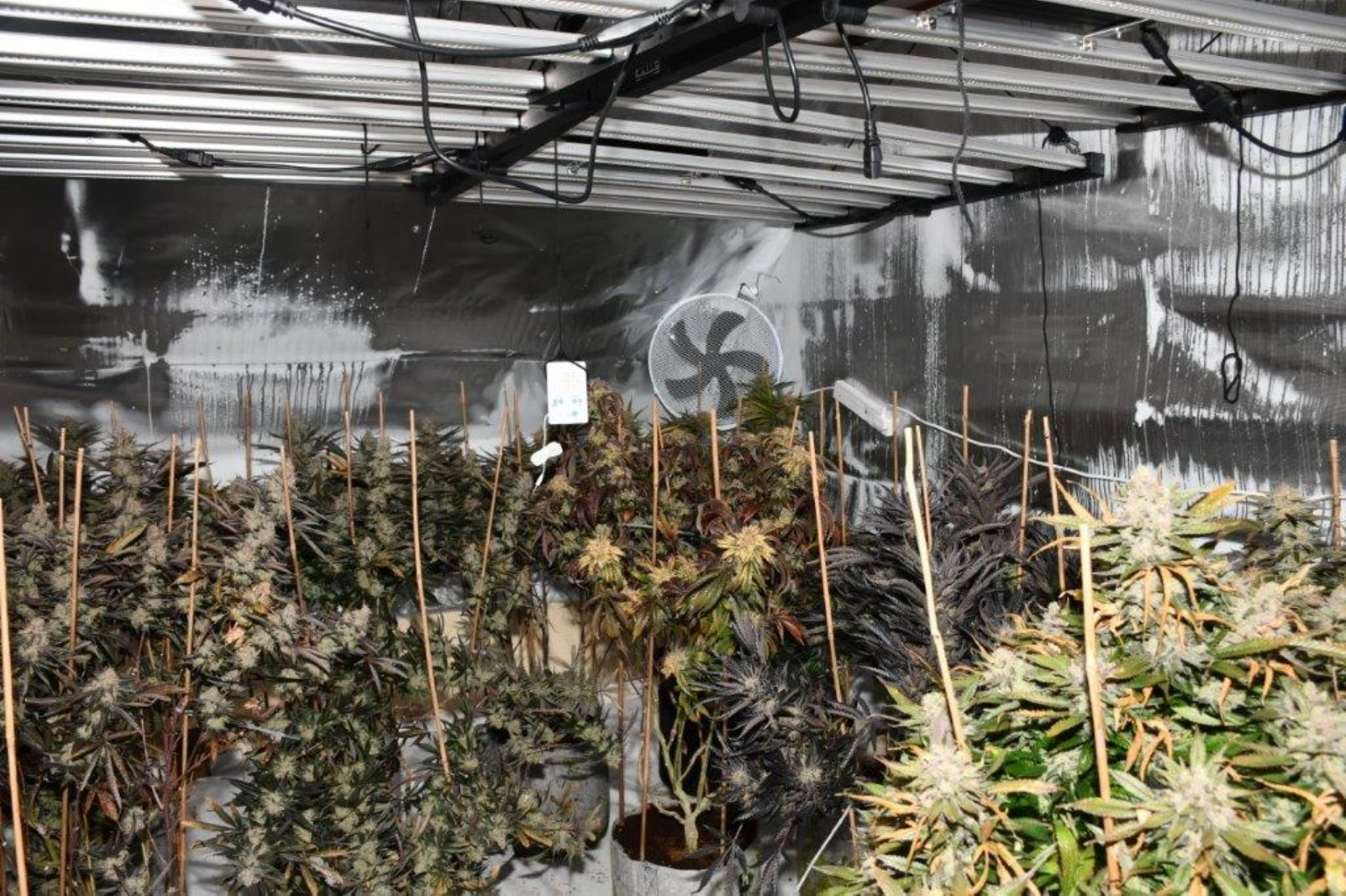

Note: Small-scale site dismantled by the Garda Síochána in 2024; large-scale site dismantled by the Guardia Civil in 2024.
The use of CBD in the production of semi-synthetic cannabinoids, such as hexahydrocannabinol (HHC), is a cause of concern. In 2026, the EUDA has been asked to assess CBD as a precursor to support the evaluation of its role in the production of THC or other psychoactive cannabinoids. In 2024, at least three illicit sites involved in the production of THC or semi-synthetic cannabinoids were dismantled: two in the Netherlands and one in Poland.
Cannabis policy developments highlight role of evaluation
A number of EU Member States are considering or changing their policy approach to regulating recreational use of cannabis by adults. While differing in terms of scope and stage of implementation, the regulation models being developed generally involve prevention measures, non-profit sales and monitoring and evaluation. In December 2021, Malta legislated for limited home growing, possession of small amounts and cannabis use in private. In July 2023, Luxembourg legislated to permit limited home growing and use in private, and in February 2024, Germany legislated to allow limited home growing, possession and use of small amounts, and Malta and Germany also allow non-profit sales to members of regulated growing associations. The Netherlands is conducting an experiment with a closed cannabis supply chain in 10 municipalities, starting in 2025. During the trial, cannabis produced in regulated premises will be sold through coffeeshops. In January 2026, Czechia legislated to permit individuals to cultivate up to three cannabis plants for consumption in private. Home-growing activity in Germany, Luxembourg and Malta is not systematically monitored, making the scale of uptake unclear. By the end of 2025, Germany and Luxembourg had published interim evaluation reports. Further monitoring and evaluation will provide policy-relevant insights into outcomes.
See also Cannabis laws in Europe: questions and answers for policymaking and Drug policy evaluation in Europe
Key data and trends
Prevalence and patterns of cannabis use
-
Last year cannabis use among the EU population aged 15 to 34 is estimated at 15.3% (15.4 million), with males being typically twice as likely to report use as females (Figure 2.3). Among 15- to 24-year-olds, an estimated 18.0% (8.6 million) used cannabis in the last year, and 9.6% (4.6 million) used the drug in the last month. It is estimated that around 1.6% (4.5 million) of adults (aged 15 to 64) and 2.3% (2.3 million) of young adults (aged 15 to 34) are daily or almost daily cannabis users (that is, using the drug on 20 days or more in the last month).
- Trends in cannabis use at the national level appear mixed. Of the countries that have produced surveys since 2023, 3 reported higher estimates, 10 were stable and 2 reported a decrease compared with the previous comparable survey.
- The 2024 ESPAD school survey of 15- to 16-year-old school students showed cannabis was the most widely used illicit drug in all participating EU Member States. On average, 13% of students had used cannabis at least once in their lifetime.
- In 2025, of the 63 cities from 17 EU Member States, Norway and Türkiye with data available from 2024, 21 (33%) reported an annual increase in the cannabis metabolite THC-COOH in wastewater samples, while 28 (44%) reported a decrease (Figure 2.4).
Treatment entry for cannabis use
-
People entering specialist drug treatment for problems related to cannabis use accounted for 33% of all treatment demands reported in the European Union, Norway and Türkiye in 2024. Of the estimated 104 000 clients, about 62 000 were first-time entrants. Cannabis was the main problem drug most frequently cited by new treatment clients, accounting for 41% of all first-time treatment entrants (Figure 2.5).
Hospital presentations related to cannabis
- Available national data indicate cannabis is involved in a large proportion of the thousands of drug-related emergency presentations to hospitals in some EU Member States. In 2023, cannabis was involved in over 46% of the cases (3 700 out of 8 000) reported in Spain and in 28% (over 6 300 out of 24 300) of the cases reported in France.
- After cocaine, cannabis was the second most frequently reported substance by the Euro-DEN Plus network of sentinel hospitals in 2024. The median proportion of presentations involving cannabis was 20% across the reporting hospitals. Cannabis was typically reported in the presence of other substances. The median age of those presenting with cannabis was 28 years; 74% were males.
Cannabis market data
-
In 2024, EU Member States reported 252 000 seizures of cannabis resin, amounting to 321 tonnes (551 tonnes in 2023), and 219 000 seizures of herbal cannabis, amounting to 199 tonnes (201 tonnes in 2023) (Figure 2.6). In 2024, Türkiye reported 17 400 seizures of cannabis resin, amounting to almost 14 tonnes, and 80 000 seizures of herbal cannabis, amounting to 47.7 tonnes.
- After a 43% decrease in 2022, followed by a small increase, the overall quantity of cannabis resin seized in the European Union decreased markedly again in 2024 (−42%). Despite a 45% decrease compared with 2023, Spanish cannabis resin seizures remained the largest in Europe (206 tonnes).
- Approximately 477 000 offences relating to cannabis use or personal possession were reported in the European Union in 2024 (615 000 in 2023), alongside 74 000 supply offences (100 000 in 2023).
- In 2024, the average THC content of cannabis resin seized in the European Union was 24.6%, twice that of herbal cannabis, at 12%. Indexed trends show that the average THC content of resin increased by 66% between 2014 and 2024, whereas that of herbal cannabis increased by 19% over the same period.
See also EU Drug Market: Cannabis – In-depth analysis and Cannabis: health and social responses.
Source data
The data used to generate infographics and charts on this page may be found below.
The complete set of source data for the European Drug Report 2026, including metadata and methodological notes, is available in our data catalogue.
A subset of this data, used to generate infographics, charts and similar elements on this page, may be found below.
Prevalence of drug use data tables including general population surveys and wastewater analysis (all substances)
Other data tables including tables specific to cannabis