


New psychoactive substances – the current situation in Europe (European Drug Report 2026)
The market for new psychoactive substances is characterised by the large number of substances that have emerged, with new compounds being detected each year. On this page, you can find an overview regarding new psychoactive substances in Europe, supported by information from the EU Early Warning System on seizures and substances detected for the first time in Europe. New substances covered include synthetic and semi-synthetic cannabinoids, synthetic cathinones and new synthetic opioids.
This page is part of the European Drug Report 2026, the EUDA’s annual overview of the drug situation in Europe.
Last update: 9 June 2026
Record volumes and hazardous new substances highlight market adaptation driving health risks
Concern continues to grow about the integration of the markets for new psychoactive substances and illicit drugs and the response complications this raises, including addressing inadvertent consumption. Reflecting the relentless efforts of drug production and distribution networks, for the fifth year in a row, law enforcement agencies in EU Member States reported a record quantity of new psychoactive substances to the EU Early Warning System, amounting to 55 tonnes imported or seized. New and harmful substances continue to be created to circumvent legal controls, with 50 new psychoactive substances notified for the first time in 2025. In addition, around 400 previously reported new substances were detected on the market in 2024.
In general, the health risks from consuming these novel compounds are poorly understood, although some expose consumers to the risk of severe or even fatal poisonings and other health problems. Legislative controls and other regulatory measures taken in Europe and non-EU source countries have contributed to a reduction in the number of new psychoactive substances appearing for the first time annually, particularly substances specifically targeted, such as fentanyl derivatives and synthetic cannabinoids. Other substances, however, designed to evade legislation, continue to emerge, with China and India remaining important source countries for these substances or the precursors needed to produce them.
Highly potent synthetic cannabinoids in various forms pose risk of poisoning
In 2025, European countries identified 27 new cannabinoids, 16 of which were semi-synthetic cannabinoids, representing over 50% of the new substances first reported to the EU Early Warning System that year.
Vulnerable populations, including people in prison or experiencing homelessness, are particularly affected by the public health risks posed by synthetic cannabinoids, which are often highly potent and carry poisoning risks. These compounds may be mis-sold or used to adulterate cannabis and semi-synthetic cannabinoid products without the consumers’ knowledge, increasing the risk of poisonings. Cannabis edibles, which include foods such as sweets infused with cannabis extract, represent an evolving risk as they have become more available on Europe’s illicit market.
After China implemented generic legal controls in July 2021, the supply of synthetic cannabinoids to European markets diminished. This led to a marked reduction in the availability of dominant compounds, such as MDMB-4en-PINACA and ADB-BUTINACA. There are now signals that the manufacture of these substances has shifted to Europe, near consumer markets. These include reports of dismantled production laboratories (Figure 7.1) and seizures in 2023 of 148 kilograms of MDMB-INACA, which can be used to manufacture various cannabinoids, including MDMB-4en-PINACA. In 2024, over 107 kilograms of powder and 130 litres of MDMB-4en-PINACA were seized in the Netherlands.

Source: Greek Police, Central Anti-drug Co-ordination Unit – National Intelligence Unit (SODN-EMP), General Chemical State Laboratory.
Concerns also exist about the increasing adulteration of low-THC cannabis and CBD products with synthetic cannabinoids, the re-emergence of ‘legal high’-type products and increased vaping of e-liquids containing these substances. In September 2025, Czechia reported an outbreak of poisonings linked to a new synthetic cannabinoid, MDMB-PINACA, sold in ‘legal high’ type products (Figure 7.2).

Source: Czech Reitox national focal point.
Continued availability of semi-synthetic cannabinoids creates health concerns
Semi-synthetic cannabinoids are chemically modified forms of the cannabinoids found in the cannabis plant. They were first reported in Europe in 2022, marketed as legal alternatives to cannabis and delta-9-THC. By the end of 2025, a total of 40 semi-synthetic cannabinoids had been identified on European drug markets. HHC (hexahydrocannabinol) was the first of these substances to be identified, and it was placed under international control in December 2025. Reflecting the cycle of creating new substances to circumvent legal controls, other semi-synthetic cannabinoids are now available in Europe as replacements for HHC, including hexahydrocannabinol acetate (HHC acetate) and hexahydrocannabiphorol (HHC-P).
While initially most semi-synthetic cannabinoids were imported from the United States, they are now also produced in Europe (Figure 7.3). Production has evolved from CBD-derived compounds from low-THC cannabis, such as HHC, to now include products such as HHC-P, which seem to be fully synthetic.
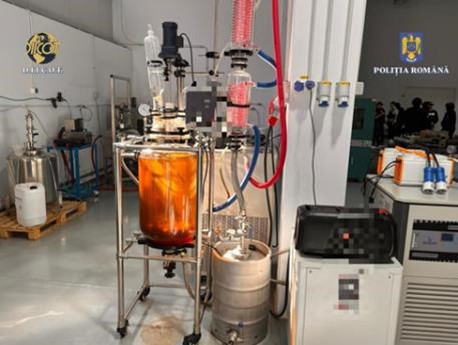
Source: DIICOT – Iasi Territorial Service, operation ‘Dream Factory’.
Although the effects of semi-synthetic cannabinoids on humans remain poorly studied, reports suggest they are similar to those of cannabis, with adverse reactions ranging from mild to severe poisoning, sometimes requiring treatment in hospital. Some countries report increasing numbers of poisoning cases involving these substances. The pharmacological similarity of semi-synthetic cannabinoids to delta-9-THC raises concerns about their potential to trigger psychotic episodes as well as their abuse and dependence potential.
Semi-synthetic cannabinoids are widely available online and, in some countries, through physical retail outlets, including vape shops and stores selling low-THC cannabis and CBD products. They may also be sold in convenience stores and via vending machines. The main products are flavoured edibles and vapes and low-THC cannabis sprayed or mixed with the cannabinoids. Their accessibility and perceived legal status may attract both cannabis users and first-time users, potentially including children and young adults. The resemblance of edibles to common foods, especially sweets, poses accidental consumption risks, particularly for children.
Laboratory analysis reveals that products and batches can differ widely in the type and concentrations of semi-synthetic cannabinoids present, with some containing very high amounts. Products may include undeclared cannabinoids, such as delta-9-THC or delta-8-THC, or novel semi-synthetic compounds in high doses, which may pose a risk of poisoning. Overall, such variability and unpredictability add to the risk of poisonings.
The rapid spread of vapes and edibles – especially gummies – is particularly concerning from a public health perspective. Their accessibility and appeal may attract new, possibly younger, consumers who might not otherwise use or have access to illicit cannabis or want to smoke cannabinoids. In addition, the slower absorption of cannabinoids from edibles and the later onset of initial effects compared with vaping or smoking can lead to users consuming multiple portions, risking toxic doses.
Imports and production fuel crossover of synthetic cathinones into illicit drug markets
Synthetic cathinones have become established as replacements for stimulants such as amphetamine and cocaine in some parts of Europe. While inadvertent consumption in drug mixtures and tablets remains a concern, some consumers may consider these different stimulants to be functionally equivalent in terms of their effects and intentionally seek them out as affordable alternatives. In 2025, four new cathinones were notified, while 69 previously reported synthetic cathinones were also detected on the EU drug market in 2024. Reports to the EU Early Warning System indicate that N-ethylnorpentedrone (NEP) was being increasingly mis-sold as another cathinone, 3-MMC, in 2025, leading to unintended consumption and increased poisonings.
Reported seizures and imports of synthetic cathinones in the European Union increased by 11.5 tonnes to 48.5 tonnes in 2024, with preliminary data indicating continued large quantities through the first half of 2025. A small number of bulk imports from India, primarily through the Netherlands, accounted for most of the reported material. In July 2025, the Netherlands introduced generic (all-encompassing) legal controls covering synthetic cathinones, which may significantly affect their importation.
Responding to evidence of the increasing availability and associated health harms, in 2025, the EUDA Scientific Committee carried out risk assessments on three cathinones: 2-methylmethcathinone (2-MMC), 4-bromomethcathinone (4-BMC) and N-ethylnorpentedrone (NEP). Based on the assessments, the Commission adopted legislation subjecting these substances to EU drug control measures in January 2026.
The continuation of large seizures of precursors in 2024 and the dismantling of 65 illicit laboratories suggest that the production of synthetic cathinones remains significant within the European Union, particularly in Poland (Figure 7.4) (see also Drug supply, production and precursors – the current situation in Europe). While 3-MMC, 3-CMC and 2-MMC have been the dominant cathinones in recent years, less common cathinones such as alpha-pyrrolidinoisohexanophenone (alpha-PHiP, sometimes sold as ‘Flakka’) can create localised health problems and are difficult to monitor. These smaller-scale trends may miss early detection by public health agencies, potentially causing serious harm before being identified.
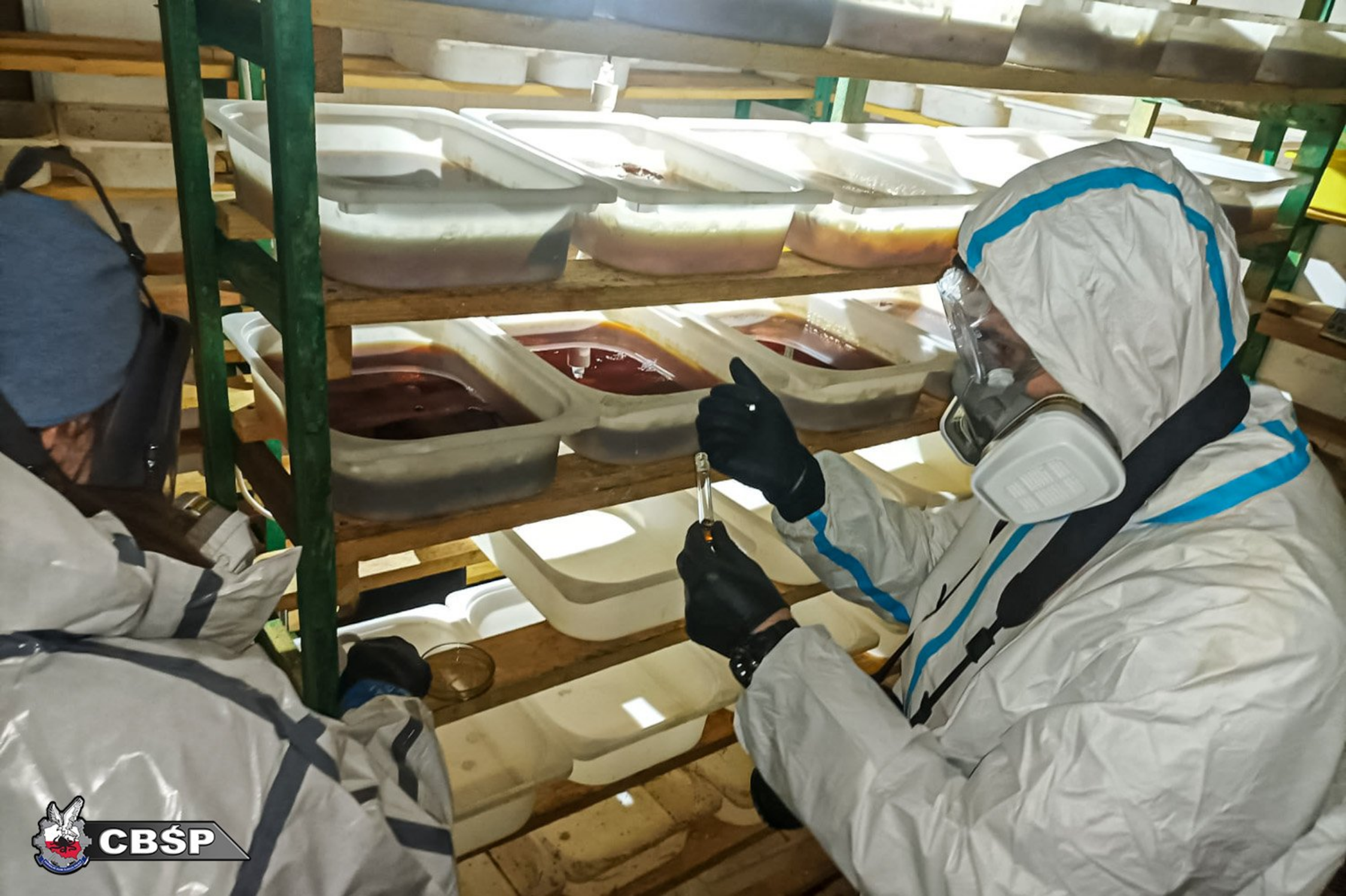

Source: Central Bureau of Police Investigation.
Availability of new synthetic opioids remains a potentially lethal threat
New synthetic opioids are often highly potent, posing an increased risk of life‑threatening poisoning. Since 2019, fentanyl derivatives in Europe have been largely replaced by benzimidazole ‘nitazene’ opioids and, more recently, by benzimidazolone ‘orphine’ opioids. Seven new synthetic opioids were formally notified to the EU Early Warning System in 2025, including three nitazenes and three orphines. Since 2019, at least 21 EU Member States have reported a nitazene and at least 10 have reported an orphine.

Source: Swedish Customs Laboratory.
Reports of poisonings linked to nitazene opioids, including fatal cases, have been increasing in some European countries since 2022. In 2024, the quantity of nitazene powders seized in Europe decreased to 7 kilograms, while over 5 kilograms of powders containing orphine opioids were reported. The high potency of these substances means minuscule amounts can make retail-level doses or mixes. The EU Early Warning System has received increasing reports of fake medicines containing nitazene opioids (Figure 7.5). These products typically mimic legitimate prescription medications, particularly oxycodone and, to a lesser extent, benzodiazepines such as diazepam and alprazolam. Their seemingly authentic appearance may contribute to a false sense of security among consumers. Although predominantly used by high‑risk opioid users, such tablets may also be used by other groups, including people experiencing chronic pain. There are concerns that they may spread among populations without opioid tolerance, including young people. In 2024, 10 countries detected more than 50 000 nitazene‑containing tablets, up from 23 000 in 2023 and 380 in 2022. Preliminary data for 2025 indicate further detections in at least seven EU Member States. In addition, Bulgaria reported more than 100 fentanyl-related deaths over the period 2024-2025.
The Taliban’s ban on opium poppy cultivation in Afghanistan since April 2022 has significantly reduced opium production, but its impact on heroin availability in Europe remains uncertain. Any emerging supply gap could, in some countries, be partially filled by new synthetic opioids and other substances.

Source: University of Freiburg Clinic.
In view of generic controls on nitazene opioids introduced by China in July 2025, and preliminary evidence that these measures may substantially reduce nitazene availability in Europe, novel opioid families are candidates to fill this emerging gap in the opioids market. One possible replacement is the ‘orphine’ family of opioids: 11 countries have reported detecting cychlorphine and 6 have detected spirochlorphine. Between June 2024 and January 2026, 5 EU Member States reported 5 cases of acute non-fatal poisoning and 18 deaths with confirmed exposure to orphines, mostly cychlorphine (Figure 7.6). Estonia and Latvia have reported injecting use of both substances. While limited pharmacological data are available for these substances, their structural similarity to brorphine, a potent opioid, suggests that a key health risk is likely to be respiratory depression (see also Heroin and other opioids – the current situation in Europe).
These developments underscore key preparedness challenges for the European Union and Member States. In particular, national early warning systems and their associated laboratory networks must maintain readiness to detect and respond to emerging new synthetic opioids, such as the orphines. More generally, the availability of highly potent synthetic opioids requires us to review whether the current approaches used to prevent, treat and reduce the harms related to opioid use remain fit for purpose and whether existing systems have the capacity to respond effectively (see also Opioid agonist treatment – the current situation in Europe and Harm reduction – the current situation in Europe).
See also the 2024 EUDA-Europol EU Drug Market: New psychoactive substances – In-depth analysis and the EUDA’s Health and social responses to drug problems: a European guide.
Key data and trends
New psychoactive substances reported
- At the end of 2025, the EUDA was monitoring 1 050 new psychoactive substances, 50 of which were first reported in Europe in 2025 (Figure 7.7 and Table 7.1).
- Approximately 400 new psychoactive substances were detected in seizures in 2024 (Figure 7.8).
- In 2025, the EU Early Warning System received reports of 27 new cannabinoids, bringing the total number being monitored to 304.
- Since 2009, a total of 95 new opioids have been identified on the European drug market, with 7 new substances notified in 2025, 6 of which were highly potent new opioids: nitazenes (3) and orphines (3), which can be hundreds of times more potent than heroin. To date, 25 nitazenes have been identified in Europe (Figure 7.9).
Seizures of new psychoactive substances
- In 2024, EU Member States accounted for approximately 54 600 of the 184 000 seizure or import cases of new psychoactive substances reported in the European Union, Norway and Türkiye, representing 99.8% of the 55.1 tonnes reported (41.4 tonnes in 2023) (Figure 7.10). The increase was driven by a small number of cases involving cathinones (2-MMC, NEP) (Figure 7.11). In addition, approximately 11 700 litres of liquids containing new psychoactive substances were seized, mainly 4-CMC (564 litres) and H4-CBD (416 litres).
- In 2024, just 5 substances accounted for almost 90% of the quantity of new psychoactive substances reported by EU law enforcement agencies: 4 cathinones (2-MMC, NEP, 4-CMC and MDPHP, amounting to 44 tonnes) and HHC (3.2 tonnes) (Figure 7.11).
Figure 7.10. Seizures of new psychoactive substances in the European Union, 2006-2024
(a) Number of seizures
Figure 7.10. Seizures of new psychoactive substances in the European Union, 2006-2024
(b) Quantity seized
- In 2024, a total of 24 countries reported seizing 110 kilograms (100 kilograms in 2023) of synthetic cannabinoids and 1 320 kilograms (154 kilograms in 2023) of semi-synthetic cannabinoids as herbal material. The quantity of synthetic cannabinoid powder seized increased in 2024, with 159 kilograms of material seized in a small number of seizures. With 3.2 tonnes and 200 litres, HHC accounted for most of the semi-synthetic cannabinoids seized. Edibles and vape products containing synthetic cannabinoids or semi-synthetic cannabinoids accounted for around 37% of the seized material, amounting to 1.9 tonnes, reported by 18 countries.
- Countries reported 1 063 seizures and 35.5 kilograms of synthetic opioids to the EU Early Warning System in 2024, an increase from the 22 kilograms seized in 2023. The quantity of nitazenes seized decreased, from 10 to 7 kilograms seized in 2024. Of the seizures of new opioids reported, 26% contained metonitazene, 25% contained carfentanil, 22% contained tramadol and 10% contained protonitazene. A total of 35.5 kilograms of material was seized, with 31% (11.1 kilograms) containing 2-methyl-AP-237, 21% (7.6 kilograms) containing tramadol and 16% (5.6 kilograms) containing spirochlorphine. A small number of countries accounted for most of the synthetic opioid seizures: Germany, Estonia, Latvia and Lithuania reported 62% of the seizures and 70% (25.0 kilograms) of the quantity seized.
Prevalence of new psychoactive substances use
- National estimates of last year use of new psychoactive substances (excluding ketamine and GHB) among young adults (aged 15 to 34) range from 0.1% in Latvia and Norway to 2.9% in Bulgaria. National estimates of last year use of cathinones among young adults (aged 15 to 34) range from 0.1% in Romania to 4.4% in the Netherlands.
- The 2024 ESPAD school survey estimated that among 15- to 16-year-old students in the European Union, the average lifetime use of new psychoactive substances was 2.6%, ranging from 0.6% to 6.4%. Lifetime use ranged from 0.7% to 16% for synthetic cannabinoids, 1.1% to 3.7% for synthetic cathinones and 0.6% to 2.2% for synthetic opioids.
- In the 2024 European Web Survey on Drugs, a non-representative survey of people who use drugs, 16% of respondents had used new psychoactive substances in the last 12 months. Of those respondents, 21% reported using the substances alongside herbal cannabis and 15% with MDMA/ecstasy in the last episode of use. With regard to the substances used in the last 12 months, 14% of respondents reported having used semi-synthetic cannabinoids, 3% synthetic cannabinoids and 9% synthetic cathinones. Around 70% of the respondents who had used new psychoactive substances stated that they consumed the drug ‘to get high or for fun’.
Source data
The data used to generate infographics and charts on this page may be found below.
The complete set of source data for the European Drug Report 2026, including metadata and methodological notes, is available in our data catalogue.
A subset of this data, used to generate infographics, charts and similar elements on this page, may be found below.