

Other drugs – the current situation in Europe (European Drug Report 2026)
Alongside the more well-known substances available on illicit drug markets, a number of other substances with hallucinogenic, anaesthetic, dissociative or depressant properties are used in Europe: these include LSD (lysergic acid diethylamide), hallucinogenic mushrooms, ketamine and GHB (gamma-hydroxybutyrate). On this page, you can find the latest analysis regarding these substances in Europe, including seizures, prevalence and patterns of use, treatment entry, harms and more.
This page is part of the European Drug Report 2026, the EUDA’s annual overview of the drug situation in Europe.
Last update: 9 June 2026
Signals of harms from uncommonly used drugs highlight monitoring challenges
Alongside well-known illicit substances available on drug markets, a number of other drugs with stimulant, hallucinogenic, anaesthetic, dissociative or depressant properties are used in Europe: LSD (lysergic acid diethylamide), hallucinogenic mushrooms, ketamine and GHB (gamma-hydroxybutyrate). Some of these substances are well established in some countries, cities or among specific populations, but their relative prevalence may remain low in comparison to other illicit drugs. However, current monitoring approaches often perform poorly in identifying patterns and trends in the use of these less well-known substances. This makes commenting with confidence on the prevalence of use and related harms difficult.
Ketamine’s integration into drug markets creates harm reduction and treatment challenges
Ketamine is consistently available in some national drug markets and may have become a drug of choice in some settings. It is also consumed in combination with other substances (e.g. alcohol and stimulants). For example, cocaine was the substance most often reported in combination with ketamine in acute toxicity presentations to Euro-DEN sentinel hospital in 2024.
Ketamine is commonly snorted and is associated with dose-dependent acute and chronic harms, such as urological complications, notably bladder damage from intensive use.
Ketamine is also added alongside other stimulants to drug mixtures, such as ‘pink cocaine’ or ‘tucibi’. However, data from drug checking services indicate that combining ketamine with other drugs is often intentional, with the majority (83%) of ketamine samples tested in 2025 containing only the intended drug.
The availability of ketamine is underpinned by well-established supply routes. In 2024, ketamine was seized, mostly as powder, throughout the European Union, but more frequently in Spain and in larger quantities in Germany, which accounted for more than three quarters of the quantity reported. A recent EUDA situational assessment confirms that most of the ketamine seized in Europe originates from licit production in India and is imported in bulk to EU Member States, mainly Germany, and then diverted to Europe’s illicit market and also exported. Ketamine production in Europe remains limited, although sites engaged in crystallisation rather than synthesis are sometimes dismantled. Theft and diversion of ketamine medicines play a minor role in the illicit market.
Treatment access and referral pathways to specialised care remain a challenge for people with ketamine-related health problems. The number of clients entering specialised treatment for problems related to ketamine use remains low. However, it has quadrupled over the last five years, from 413 cases reported in 2019 to 1 796 in 2024. The majority of these cases are reported by six countries (Belgium, Germany, Spain, France, Italy, Netherlands), likely reflecting higher ketamine availability in some parts of Europe and limited treatment options elsewhere. People who have developed urological problems may be poorly represented in drug treatment data. The Netherlands, which has seen a small but steady increase in ketamine-related urological problems from 2022 to 2024, established an outpatient hospital clinic specialising in the treatment of patients experiencing problems resulting from chronic, intensive use of ketamine.
Availability of new benzodiazepines poses public health risks
Non-controlled and new benzodiazepines continue to be available in more than two thirds of European countries. A total of 40 new benzodiazepines were notified to the EU Early Warning System between 2007 and 2025 (Figure 8.1), with 28 of these appearing on the drug market in 2024 in 22 EU Member States and Norway (see New psychoactive substances – the current situation in Europe). Commenting with certainty on the scale of their use is difficult because of monitoring challenges.
The seemingly legitimate appearance of fake medicines can create a false sense of security among consumers regarding their use. In some countries, benzodiazepines are widely available on the illicit market (see Figure 8.2) and continue to be linked to poisoning and overdose outbreaks, which can escalate rapidly, with vulnerable populations potentially experiencing disproportionate levels of risk. Ireland, for example, experienced three poisoning and overdose outbreaks in prisons in 2024, including one incident involving a new benzodiazepine, clobromazolam; the other two involved highly potent nitazene opioids being mis-sold as heroin and benzodiazepines.
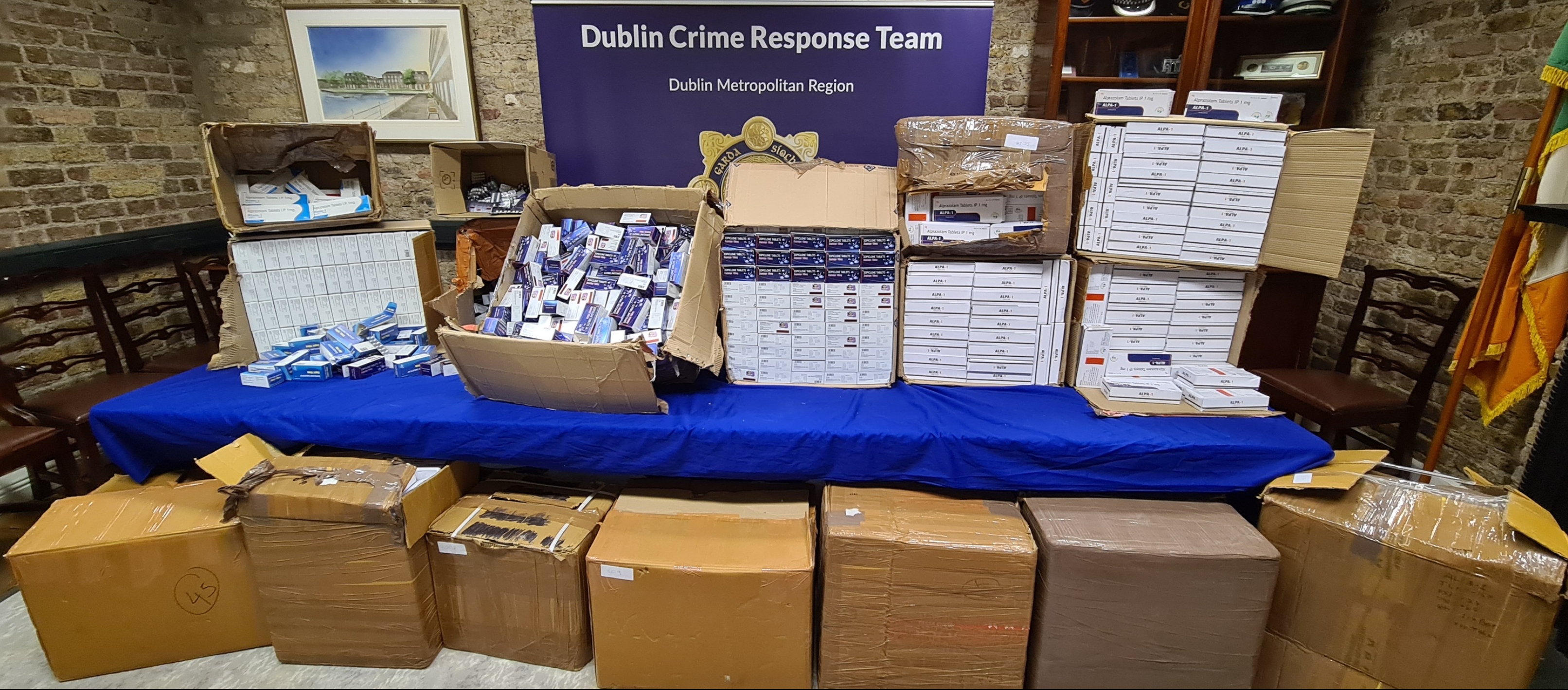

Note: Seizure made in October 2024 during Operation Citizen by the Dublin Crime Response Team, Garda Síochána (police), Ireland. Value of seizure estimated at EUR 1.9 million.
Overdoses from new synthetic opioids can be reversed with naloxone, but those caused by benzodiazepines require a different antidote that is generally only administered in medical settings and may require hospitalisation, as was the case in Ireland. Prolonged use of benzodiazepines can cause dependence and withdrawal symptoms can be life-threatening. Among people entering treatment in Europe, Ireland reported the highest number (1 711) citing benzodiazepines as their main problem drug. In Finland and Lithuania, 10% or more of treatment entrants cited benzodiazepines.
Key data and trends
Prevalence and patterns of use of other drugs
- Among young adults (aged 15 to 34), recent national surveys show last year prevalence estimates for LSD equal to or less than 1%. Exceptions for LSD include Estonia (2.3% in 2023, 16-34), France (1.6% in 2023, 18-34), Germany (1.4% in 2024, 18-34), Latvia (1.4% in 2020), Finland (1.3% in 2022), the Netherlands and Denmark (both 1.1% in 2024 and 2023).
- Countries that reported last year prevalence estimates for hallucinogenic mushrooms among young adults greater than 1% include Czechia (2.7% in 2024), Finland (2.7% in 2022), Estonia (2.6% in 2023, 16-34), the Netherlands (2.5% in 2024), Norway (2.3% in 2024, 16-34), Ireland (2.0% in 2023), France (2.0% in 2023, 18-34), Denmark (1.7% in 2023, 16-34) and Germany (1.2% in 2024, 18-34).
- Recent estimates of last year prevalence of ketamine use among young adults (15-34) range from 0.3% in Romania (2024) to 3.1% in the Netherlands (2024).
- The 2024 ESPAD school survey estimated that among 15- to 16-year-old school students in the European Union, the average lifetime use of LSD and other hallucinogens was 1.8%, ranging from 0.7% to 6.8%. The average lifetime use for GHB was 1%, ranging from 0.3% to 3.4%.
- Among respondents to the 2024 European Web Survey on Drugs, a non-representative survey of people who use drugs, 18% of those who had used drugs within the last 12 months had used hallucinogenic mushrooms, 14% reported having used ketamine, 10% LSD or other hallucinogens and 3% GHB/GBL (gamma-hydroxybutyric acid/gamma-butyrolactone) and ‘tucibi’.
- In 2025, compared with other substances, relatively low levels of ketamine residues in municipal wastewater were reported by 113 cities in 23 EU Member States, Norway and Türkiye (Figure 8.3). Of the 66 cities in 21 EU Member States with data available for 2024 and 2025, 40 showed an increase (of at least 10%), 14 were relatively stable and 12 showed a decrease.
Treatment entry for ketamine use
-
The number of clients entering treatment for ketamine-related problems has increased in recent years, rising from 413 in 2019 to an estimated 1 796 in 2024.
Harms related to use of other drugs
- GHB/GBL was the fifth most common drug reported by the 29 Euro-DEN Plus hospitals across 21 EU Member States and Norway participating in 2024. Overall, it was reported by 17 emergency departments in 12 EU Member States and Norway in 2024. The drug was involved in an estimated 1% of presentations (median) across the 29 hospitals. The highest proportions of cases involving GHB/GBL were reported by hospitals in Oslo (49%), Utrecht (32%), Amsterdam (18%), Barcelona (17%), Ghent (13%) and Ljubljana (12%) (Figure 8.4). Overall, GHB/GBL was mentioned in 9% of all presentations.
- In 2024, ketamine was reported by 18 Euro-DEN Plus hospitals in 13 EU Member States and Norway and was involved in an estimated 1.3% of presentations (median) across the 29 participating hospitals. Ketamine use was reported in 4% of all presentations.
Market data for other drugs
- In 2024, almost 4 100 seizures of LSD, amounting to 214 000 units and about 24.36 kilograms, were reported in Europe (Table 8.1). Eighteen countries reported 1 025 seizures of hallucinogenic mushrooms, amounting to 42.3 kilograms. Sixteen countries reported 136 seizures of DMT (dimethyltryptamine), amounting to 92.4 kilograms and 2.2 litres.
- In 2024, ketamine seizures reported to the EU Early Warning System amounted to 1.6 tonnes of powders (2.7 tonnes in 2023), with Germany seizing 77% of the total quantity. Seizures of ketamine have fluctuated at levels above 0.5 tonnes since 2017 (Figure 8.5), while the number of ketamine seizures has increased by more than 4 times (Figure 8.6).
- One ketamine laboratory was dismantled in the European Union in 2024 (6 in 2023). Such sites have typically been engaged in the crystallisation of bulk ketamine powders.
- Drug checking services in 7 EU Member States reported an almost three-fold increase in samples submitted as ketamine between 2023 and 2025; from 652 to 1 587. The proportion of samples containing only the expected substance, without adulterants, remained stable, at approximately 82% (1 306) in 2025 in 8 EU Member States in 10 drug checking services, compared with 83% (544) in 2023.
- Fifteen European countries reported almost 1 500 seizures of GHB or its precursor GBL, amounting to 34.9 kilograms and 455 litres.
- In 2024, EU Member States reported 828 seizures of new benzodiazepines to the EU Early Warning System, representing approximately 1.4% of the total number of seizures of new psychoactive substances. Of the 40 new benzodiazepines ever reported to the Early Warning System, 27 were detected in drug seizures in 22 EU Member States and Norway in 2024.
Additional information can be found in the joint EUDA-Europol EU Drug Markets: In-depth analysis and the EUDA Health and social responses to drug problems: a European guide.
Source data
The data used to generate infographics and charts on this page may be found below.
The complete set of source data for the European Drug Report 2026, including metadata and methodological notes, is available in our data catalogue.
A subset of this data, used to generate infographics, charts and similar elements on this page, may be found below.